

The Swift Current sporting scene is overflowing with elite athletes and coaches in a wide variety of sports these days. But one of the city’s most accomplished athlete and coach is a woman who remains relatively unknown to today athletes and sports fans who frequent the gymnasiums, sports fields, and hockey rinks.
Irene Wallace is wise beyond her years, all 76 of them. She has a thousand stories to tell about her sporting exploits and it’s finally time to tell them. Her sporting career has spanned seven decades and she’s still playing hockey this season.
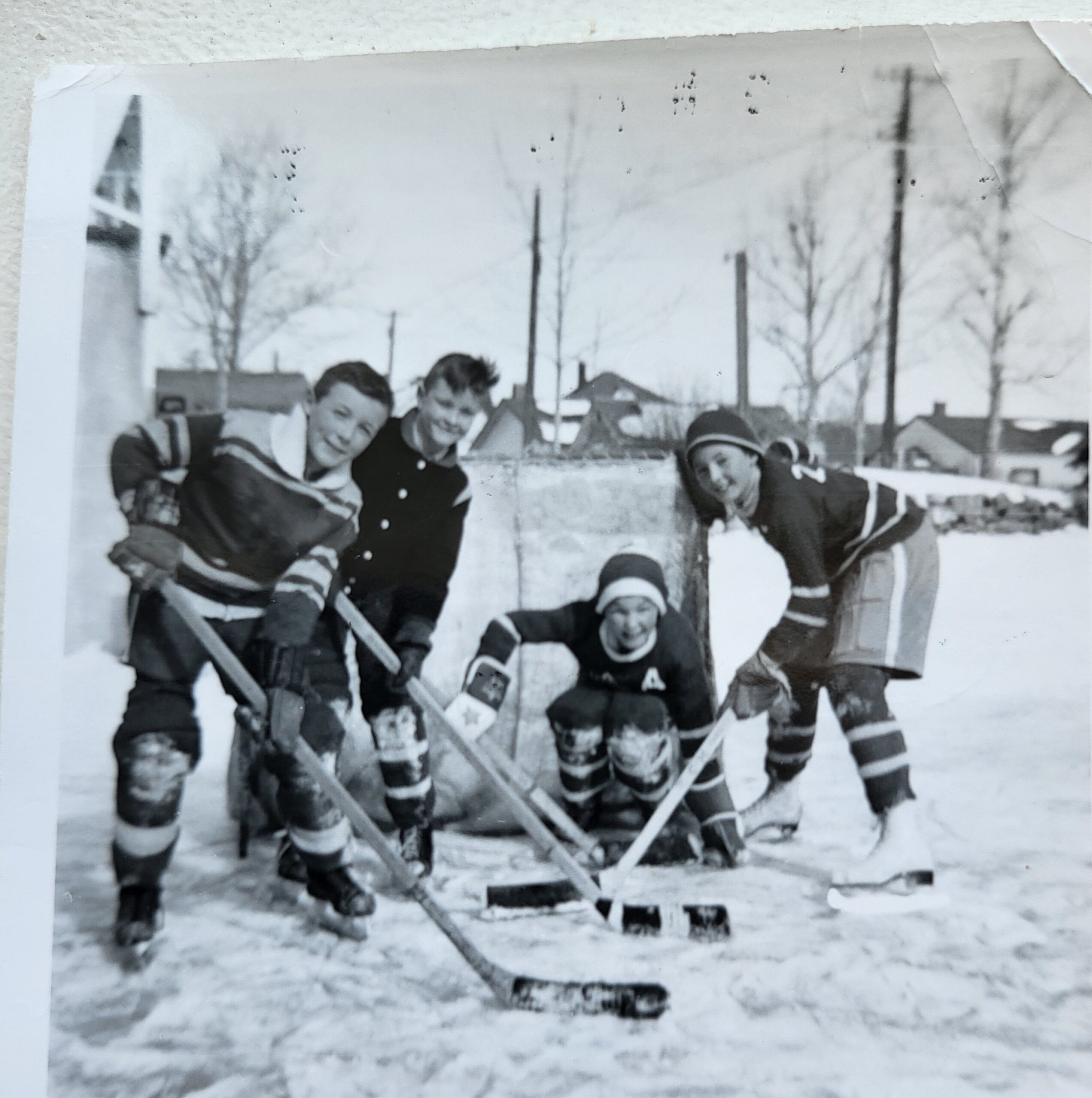
Wallace dreamed of playing ice hockey as a child in Swift Current, but there was no female team to play on. Her dad went so far as to file the picks off her figure skates.
“I have no idea why it was such a key dream goal for me. I did watch a great deal of hockey on TV. The NHL, Frank Mahovlich was my favourite player on the Toronto Maple Leafs,” said Wallace.
“We lived on 1st NW and my Dad flooded a rink. That’s where I loved to get on the ice,” she explained.
When Wallace was in grade eight she finally got a chance to play organized hockey, albeit briefly.
“My dad was short a couple players on the team that he was the assistant coach of my brothers’ team, which we played outside at 2nd West where the outdoor rink was, where they had the hut that stunk from the cigar smoke. Dad said, ‘Why don’t you come and play because a couple boys were sick.’ I don’t really remember a lot about the game except that I got to wear equipment, more proper equipment. I don’t remember if we wore helmets or not because we sure didn’t in the backyard. Much later I ran into a fella, Sunny, who became a schoolmate through high school, but he recalled for me that we won 12-2 and I scored 10 of the goals. My brother and his friends took a lot of ribbing from getting beaten by this girl.”
“My Dad got a call the next week that said, ‘We heard you had a girl on the team. She’s off or withdraw the team from the league.’ I can recall many hours of crying. ‘This isn’t fair. My brother gets to play, why can’t I?’”
She waited until the age of 59 to play organized hockey again in Victoria.
“I had my mornings free so I signed up for a variety of fitness classes through a rec centre and one of them was called Learn To Play Hockey For Women.”
“Out of that class we formed what we called Team Extreme. I was just privileged to play for about 15 years after that on that team. The majority of my teammates had played AA and we certainly had the best goalie on the island. We really earned our way to become the best team on the island. I learned how to score a lot of goals, which was awesome.”
She has since skated in the BC Senior Games in Kelowna, Victoria, Salman Arm, Abbotsford, and recently in Nanaimo. She has also played in two Nationals Senior Games in Kamloops and in Quebec City. Wallace the oldest competitor on the ice in all of those competitions.
But hockey is just a small part of her story. She was desperately shy as a kid and got a late start to sports like volleyball and basketball at Beatty Collegiate.
She made the basketball team as a grade nine. “I just was too shy. I was afraid of my teammates, I was afraid of Marilyn Szakacs, so I quit. So I actually jumped on to full blown sport participant in grade 10.
Through high school she played volleyball, basketball, badminton, and track and field.
Eventually she moved on to the University of Regina to study in the Education Department from 1967-71.
“I thought I can be whoever I want. I think I took on a persona of you can do it and go for it. When I hit the U of R I played basketball for what at the time was four years of eligibility,” said Wallace, who also played field hockey and speed swam while at the U of R.
She also garnered attention from the volleyball team and attended an open tryout for the national volleyball team.
In the summer of 1969 she found a new passion, one that would take her around the world.
“I was just going down the street and I saw these women playing softball… I had never seen women playing. I drove by and connected with one of the people just by asking.”
She played a bit in Swift Current before really getting in the game in 1970.
“I taught myself how to pitch that fall because I thought I can throw. I wasn’t the speediest runner, but I could throw. I thought I’d like to pitch and I taught myself how to windmill pitch.”
She played softball in Regina for four years before moving to Saskatoon to teach in 1976. “We started the Harmony Centre and that was where the ball really came forward.”
The Harmony Centre team won Nationals in 1978 to represent Canada in Puerto Rico at the Pan Am Games. They won Nationals again in 1980 and went to the World Games in Santa Clara in 1981.
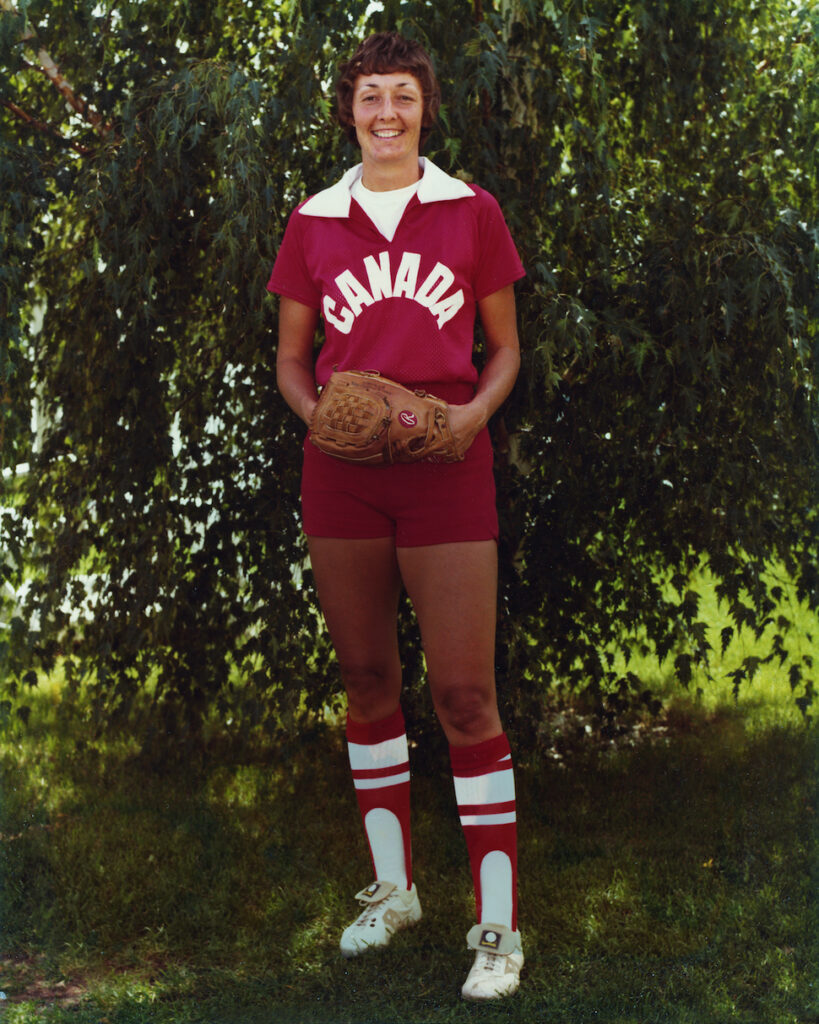
“I was a junk pitcher. I’m proud of the fact that I had probably the best change-up in the country. I accidentally learned how to hold the ball so that the softball turned in to a left-handed batter, where a softball typically curves out, so the majority of players had never seen a ball come in at them like that.”
Wallace eventually transitioned to coaching, beginning with volleyball and basketball in Moose Jaw early in her teaching career. She coached at Harmony Centre, eventually coaching the provincial women’s team, winning silver at Nationals and medalling with Saskatoon at the Saskatchewan Winter Games.
She had numerous offers to move south to coach pitching in softball but never made the jump.
Wallace made the step up to coach the University of Saskatchewan Huskies women’s basketball team from 1988 until 1994 and later coached at Camosun College in Victoria for another nine seasons. She stays in touch with many of her formers players to this day.
“I was Attila the Hun when I started coaching,” Wallace admits. “I just finished playing national softball. I was a basketball player at the university level. I coached them like I had been coached. These kids were in high school. You want to throw up, well throw up and get back on the court sort of thing. I was very tough. I think one statement that I joyfully stand behind was the majority of the players would say that I probably was a very demanding coach, but they could always tell I cared. That’s what you hopefully get is that middle ground on that.”
Aside from coaching, Wallace dedicated much of her time to serving at various levels to fight for opportunities for female athletes and coaches in Canada.
“Even when I went to coach at the U of S I was paid less than the men’s basketball coach. Money is still not equal. Look at the NHL versus professional womens hockey. It’s getting there. My best hope is with continued growth, you need sponsors, you need money, you need opportunity. Lastly, you need people supporting it in the right corner. I think people are beginning to see. You turn on the TV and you see the rugby that just finished with the women. People are beginning to realize that women can play a pretty tough game.”
She noted Saskatchewan’s Jessica Campbell, an assistant coach with the Seattle Kraken, as a recent success story.
“You’re starting to see women, the opportunities getting there. It’s exciting to see.”
The Canadian Association for the Advancement of Women in Sport was one of the organizations she worked with.
“We were largely there to help support and drive equity for women. I sat on that board for six years and learned a tremendous amount.”
Her work in that area eventually allowed her to meet tennis legend Billie Jean King, a leading advocate for gender equality in sport.
“We went down to speak at the Women’s Sport Foundation about how Canada evolved the equity in sport policy. So we were at the conference and we got the opportunity to choose whether we were going to go to a softball diamond area and go through stations or go to the tennis court. I think they had 10 of them set up and they divided us up. But Billie Jean King was on one of them, so she was doing the punch shot. We all lined up and her pro hit us one ball and we punched it back. She said, ‘You got promise,’ Wallace laughed. “That’s many years ago. I got to get my picture taken with her.”
Today, Wallace is slowed by a shoulder injury and a herniated disc, but still gets out on the ice.
“I feel so lucky because some people are not doing well with other more serious things like cancer.”
She remains an avid sports fan watching tennis, the National Hockey League, especially Connor McDavid, and she still tunes in to the odd Saskatchewan Roughriders game. She also enjoys watching university sports, especially when her Saskatchewan Huskies make the trip to the island.
“I really enjoy the Professional Womens Hockey League. I love the rivalry series that they play against the States that comes up once a year. Next to that would be NCAA and WNBA basketball. If they don’t fix though the roughness that’s going on in the WNBA they’re going to lose a lot of viewers because it’s getting pretty over the edge.”
Wallace has won more awards than she can keep likely track of, but in 2018 she won the YWCA Vancouver Island Women of Distinction for Recreation in the Sport and Healthy Living Category.
She eventually transitioned into her final career path as a ‘Career Coach’ for students and alumni at Camosun College in Victoria. She also was an active member of the National and Canada West Boards for Canadian Association or Career Educators & Employers and won a National Outstanding Achievement Award in 2017-18 and a Lifetime Achievement Award in 2020.
Wallace was recently back in Saskatchewan as her 1978 and 1980 Harmony Centre teams were inducted into the Saskatchewan Sports Hall of Fame on Sept. 20, 2025. She was previously inducted into the Saskatoon Sports Hall of Fame as a Builder and Athlete for the work she did to better opportunities for women in sport.
“You certainly look back and think boy the years went by so quickly. For me it’s 45 years ago since the last softball ones. How did so many years go by?”
The induction was an opportunity to look back on her decades spent in sports.
“If only maybe sometimes as humans we were a little more able to really enjoy the full experience to the degree it is at the time, which is not normal because you don’t really get to do that until later, but then it’s over,” she said. “Sport gave me the chance to travel the world. We played in Holland. We played in Puerto Rico. We played all over the United States. We played teams from all over the world in those tournaments. You get spoiled in a way. You pack your bags, you get on the plane, on the bus, they tell your where to go, when to eat, you show up at the ballpark. You don’t maybe see a lot of the cities and things.”